Comprehensive Guide to the American Bobtail

What you will read in this article
About the Author
Omid Mohammadi – Doctor of Veterinary Medicine (DVM) student. One day, I will place the magic of love for animals in fragrant boxes, scented like heaven, to be sent to hearts that yearn for light.
The American Bobtail: A Wild Look with a Golden Heart
If you are searching for a feline companion that is not only visually stunning and unique but also possesses an intelligent and loyal personality, the American Bobtail is the perfect choice. At first glance, their rugged, wild appearance and signature short tail might remind you of a bobcat. However, beneath that exotic look lies a cat that is profoundly affectionate, playful, and incredibly adaptable.
But what is the true story behind this remarkable breed? What specific traits set them apart from other cats, and how can you provide them with the best possible care? In this article, we will embark on a journey into the world of the American Bobtail—uncovering everything from their mysterious origins to essential care tips for every dedicated owner.
The Legend of Yodie: How the American Bobtail Began
The history of the American Bobtail is uniquely tied to a single brown tabby kitten named Yodie. In the late 1960s, John and Brenda Sanders discovered this short-tailed kitten while vacationing near a Native American reservation in Arizona. Captivated by his friendly “dog-like” temperament and wild appearance, they brought him back to their home in Iowa, unknowingly laying the foundation for a new breed.
Debunking the Hybrid Myth
Because of Yodie’s rugged look and bobbed tail, many initially believed he was a hybrid—a cross between a domestic cat and a wild Bobcat. However, this theory was scientifically debunked. When Yodie was bred with a seal-point Siamese, he produced healthy, fertile offspring. Since first-generation male hybrids of wild and domestic cats are almost always sterile, experts concluded that Yodie’s tail was the result of a spontaneous genetic mutation within the domestic cat population.
The Genetics of the Tail
Breeding trials revealed that the American Bobtail’s signature feature is governed by a dominant gene. Unlike the Manx cat, which requires a different genetic combination, a single copy of the “Bobtail gene” is enough to produce the unique short tail in kittens. This discovery allowed breeders to preserve the breed’s wild aesthetic while ensuring a healthy, stable domestic lineage.
Early Breeding Efforts: The Struggles of the American Bobtail
Following the discovery of Yodie, early enthusiasts officially named the breed the American Bobtail. In the early 1970s, Mindy Cave, a pioneer in the breed’s development, drafted the first provisional breed standard. Initially, the vision for the American Bobtail was quite specific: a long-haired cat with a pointed pattern, white “mittens,” a white facial blaze, blue eyes, and, of course, the signature short tail.
The Genetic Hurdle and Inbreeding Issues
To achieve this specific look, breeders began incorporating lines from Birman, Himalayan, and Himalayan/Siamese crosses. However, this complex genetic mix proved to be a significant obstacle. The difficulty of consistently producing kittens that met such a narrow aesthetic standard led to frustration, causing many early breeders to abandon the project.
More critically, the initial bloodlines originating from Yodie and his immediate offspring suffered from inbreeding. This lack of genetic diversity led to health complications, threatening the viability of the nascent breed. These early setbacks forced a radical shift in breeding strategies to prioritize health and vigor over specific color patterns.
Standardization and Success: The 1980s Transformation
In the mid-1980s, a dedicated group of breeders decided to pivot away from the initial, unsuccessful breeding plan. Their new goal was ambitious: to create a domestic cat that mirrored the rugged, wild aesthetic of the North American Bobcat without using any actual wild feline DNA.
The Path to the “Hunting Gaze”
To refurbish the breed, breeders moved away from purebreds like the Manx or Japanese Bobtail. Instead, they carefully selected random-bred domestic cats with natural short tails. This strategic move expanded the gene pool and ensured a hardier, healthier cat.
A key defining feature of the new standard was the forehead—slightly rounded from the brow to the eye line. This physical trait creates the prized “Hunting Gaze,” giving the American Bobtail its signature wild look while maintaining its domestic temperament.
Official Recognition and Championship Status
This new direction was a massive success. The breed became easier to raise and gained rapid popularity. Today, the American Bobtail is recognized by four major North American associations, with ACFA, CFA, and TICA all granting it Championship Status.
- TICA: Officially registered the breed in 1989.
- CFA: Accepted the breed into its Miscellaneous Class in 2000.
Characteristics and Traits of the American Bobtail
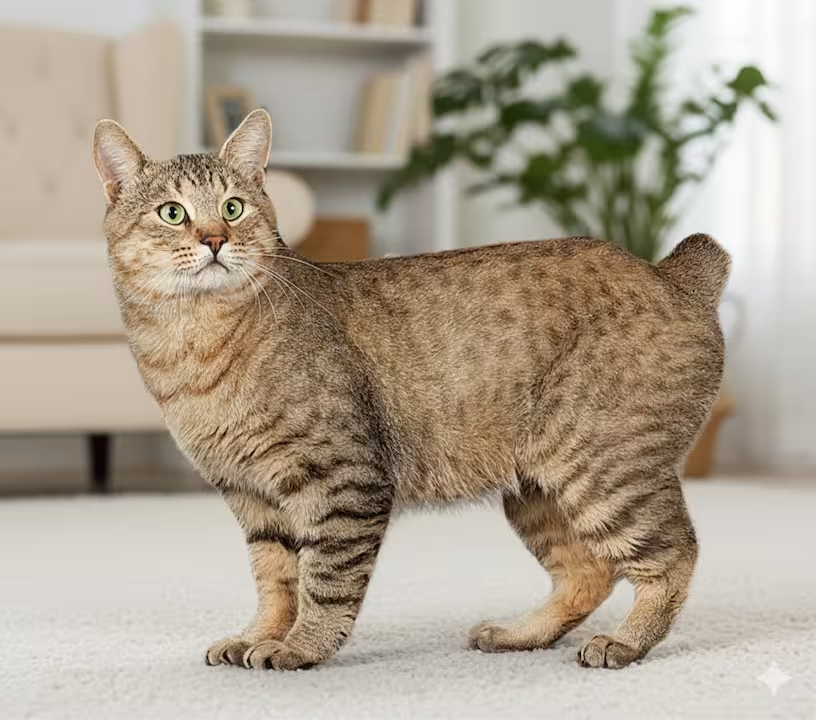
The American Bobtail is renowned for its wild appearance contrasted with a calm and friendly temperament. This medium-to-large breed is muscular, athletic, and possesses a powerful physique. Its most striking feature is the naturally short tail, which—combined with a robust body and a natural hunting gaze—gives the breed its distinctive, exotic look.
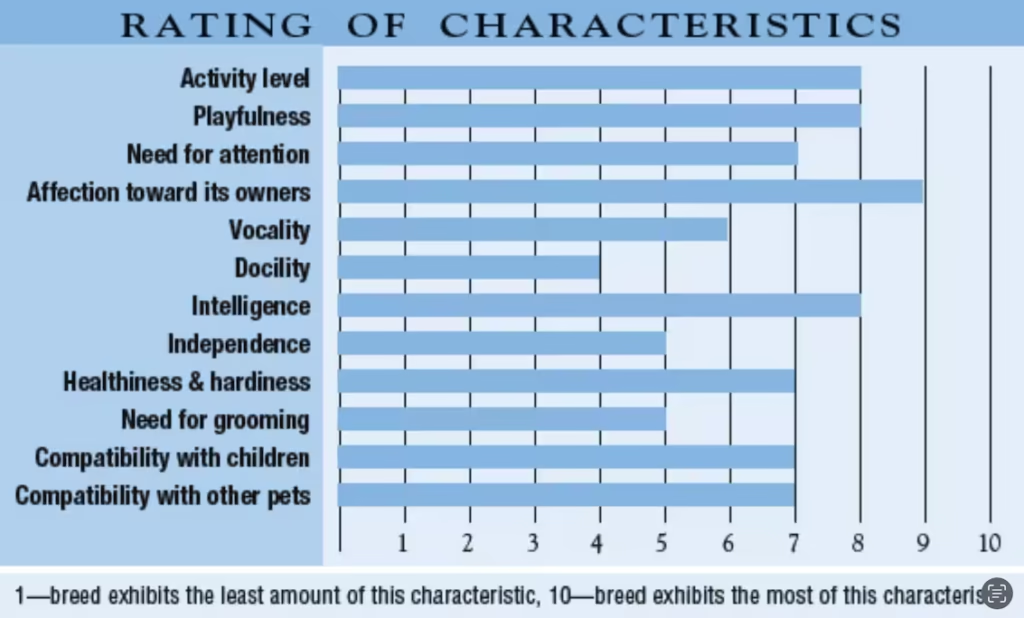
Beyond its appearance, the American Bobtail is a devoted, affectionate, and highly intelligent companion. Due to their high intelligence and “dog-like” personality, these cats enjoy games such as “fetch” and “hide-and-seek” and adapt quickly to most home environments. Their serene nature makes them excellent candidates for psychological therapy and emotional support, performing well even in busy settings. On the activity scale, they are not hyperactive but fall into the category of playful and entertaining companions.
Physical Characteristics and Appearance of the American Bobtail
The American Bobtail is a medium-to-large cat, possessing a muscular and athletic build that radiates power. Their bodies are notably long and sturdy, maintaining a distinct rectangular stance. The chest is full and broad, with strong hips that are nearly as wide as the chest. A unique structural trait of this breed is that the hindquarters are slightly higher than the shoulders, with prominent scapulae (shoulder blades).
The head of the American Bobtail is broad, featuring a modified wedge shape that is well-proportioned to the body. In profile, a gentle concave curve is visible between the nose and the brow, complemented by prominent whisker pads. Their eyes are large and almost almond-shaped, with the outer corners angled slightly toward the ears.
The legs are proportionate to the body, supported by substantial bone structure and large, round paws. In the longhair variety, toe tufts (hair between the toes) are highly desirable. This breed is slow to mature, often taking about three years to fully reach its physical breed standards.
Weight and Body Size of the American Bobtail
The American Bobtail is a medium-to-large breed, characterized by a muscular and athletic build that gives it a powerful presence. Typically, the weight of these cats ranges from 7 to 15 pounds (3 to 7 kg). Within this weight range, females are generally smaller than males, although some large males may exceed 15 pounds.
Their bodies are relatively long and sturdy, maintaining a distinct rectangular stance. The chest is full and broad, and the hindquarters are strong, nearly matching the width of the chest. These physical traits, combined with powerful legs and a substantial bone structure, provide the American Bobtail with a well-proportioned and formidable appearance.
Head and Facial Characteristics of the American Bobtail
The head of the American Bobtail is a broad, modified wedge shape, perfectly proportioned to its body without any noticeable flat planes or protrusions. A defining feature of this breed is the prominent and well-defined cheekbones.
The Profile and “Hunting Gaze”
In profile, there is a slight concave curve between the nose and the brow, with ample space between the brow and the ears. A distinct brow bone defines the top line of the eye, which, combined with the head’s structure, creates the breed’s signature natural hunting gaze.
Key Facial Features
- Stud Jowls: In adult males, a broader head and noticeable stud jowls are often evident.
- Whisker Pinch: The whisker pads are prominent and clearly defined, adding to the rugged look.
- Proportions: The entire facial structure is designed to reflect a wild yet balanced aesthetic.
The “Hunting Gaze” and Eye Variations
The American Bobtail features large, almost almond-shaped eyes that are deep-set. The outer corners are angled slightly toward the ears, creating a focused expression. A distinctive brow bone defines the top line of the eye, producing the breed’s signature natural hunting gaze.
- Eye Colors: All colors are accepted, including copper, gold, yellow, and green.
- Special Cases: Blue eyes are permitted in bi-color/van, colorpoint, lynxpoint, and odd-eyed white cats.
Lynx-like Ears
The ears are medium-sized, wide at the base, and slightly rounded at the tips. They are wide-set and upright with a slight outward tilt.
- Wild Features: Ear tipping (resembling the Lynx) and inner ear furnishings are highly desirable traits.
- The “Thumbprint”: In tabbies and lynx points, a pale “thumbprint” mark on the back of the ear is a prized characteristic.
Coat Varieties: Shorthair and Longhair
The American Bobtail is an “all-weather” breed with a non-matting, water-resistant double coat that feels similar to rabbit fur.
- Longhair: Features a semi-long, shaggy coat that becomes longer around the ruff, britches, belly, and tail.
- Shorthair: Has a medium-length, semi-dense coat with an unkempt (shaggy) appearance.
- Colors and Patterns: While all colors are accepted, patterns that enhance the “wild” look are preferred.
Powerful Legs and Substantial Paws
The American Bobtail possesses strong, sturdy legs with substantial bone structure, perfectly in proportion to its body. A key trait inherited from its wild aesthetic is that the hind legs are slightly longer than the front legs, similar to the North American Bobcat.
- The Paws: They have large, round paws. In the longhair variety, toe tufts between the digits are highly prized.
- Standard: They must have five toes on the front paws and four on the back; an incorrect number of toes is a disqualifying fault in shows.
- Gait: Their movement is described as a smooth, rolling gait.
The Unique Bobbed Tail: Genetics and Standards
The most defining feature of this breed is its short, expressive tail. It is typically one-third to one-half the length of a normal cat’s tail and must never extend below the hock.
- Structure: The tail is broad at the base, flexible, and can be straight, slightly curved, or kinked with small bumps along its length.
- Genetics: Like the Manx, this trait is controlled by an autosomal dominant gene, meaning kittens can inherit the short tail even if one parent has a long tail.
- Show Standards: For competition, the tail must be long enough to be visible above the back when the cat is alert. However, cats with no tail (rumpies) are disqualified due to potential health risks associated with a foreshortened spine.
Behavioral Traits and Personality of the American Bobtail
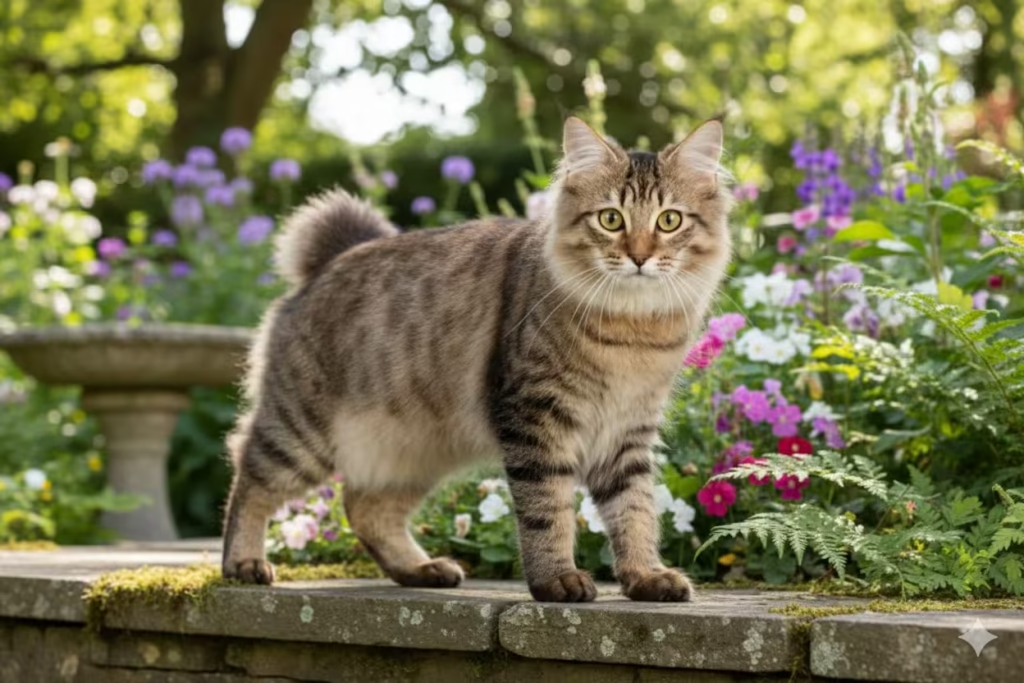
Despite its wild looks, the American Bobtail possesses a calm, domestic soul. Known for being devoted, loving, and highly intelligent, these cats form powerful emotional bonds with their families. They are confident, curious, and remarkably adaptable to almost any home environment.
1. The “Dog-Like” Personality
Enthusiasts frequently label this breed as “dog-like” due to their unique loyalty and interactive behavior.
- Training: They can easily learn to walk on a leash and harness.
- Playtime: They thrive on games like fetch and hide-and-seek.
- Social Nature: Unlike many cats that hide from strangers, Bobtails are typically social and greet newcomers with curiosity.
2. Exceptional Intelligence & “Houdini” Skills
The American Bobtail ranks high in feline intelligence. They are quick learners and can be trained to perform various tricks.
- Problem Solvers: They are notorious for Houdini-type escapes, often figuring out how to bypass latches or escape from closed rooms and crates.
- Activity Level: On a scale of 1 to 10, they sit at an 8—energetic and playful, yet never hyperactive.
3. Compatibility and Therapy Roles
Their serene temperament makes them an ideal choice for multi-pet households and emotional support roles.
- Therapy Work: Their ability to remain calm in noisy environments has led to their use as psycho-assistance therapy cats.
- Family Life: They are excellent with children and generally get along well with other cats and dog-friendly canines.
- Vocalizations: While not overly loud like the Siamese, they communicate through a delightful range of chirps and trills.
Maintenance and Health of the American Bobtail
The American Bobtail is generally a hardy and resilient breed with relatively easy maintenance needs. Thanks to the use of random-bred domestic cats as allowable outcrosses, this breed enjoys high genetic diversity, with no specific hereditary diseases or drug sensitivities reported in scientific literature.
1. Maturation and Development
A key point for owners to remember is that this breed is a slow developer. It may take up to three years for an American Bobtail to reach its full adult weight and size.
2. Grooming Needs: Built for Ease
The grooming requirements for this breed range from low to medium. Their double coat, characterized by a soft, dense undercoat, is naturally water-resistant and non-matting.
3. Shorthair Grooming
- Maintenance: Very low.
- Routine: A simple weekly brushing is sufficient to remove dead hairs and minimize shedding.
- Texture: The coat is semi-dense and stays naturally clean due to its resilient texture.
4. Longhair Grooming
- Maintenance: Low to medium.
- Focus Areas: Pay extra attention to the ruff, belly, britches (back of the legs), and tail, where the fur is longer.
- Routine: Brushing 2 to 3 times per week is recommended to manage seasonal shedding and maintain coat health.
- Advantage: Despite the length, the fur is remarkably resistant to tangling and matting.
Feeding the American Bobtail: A Long-Term Growth Strategy
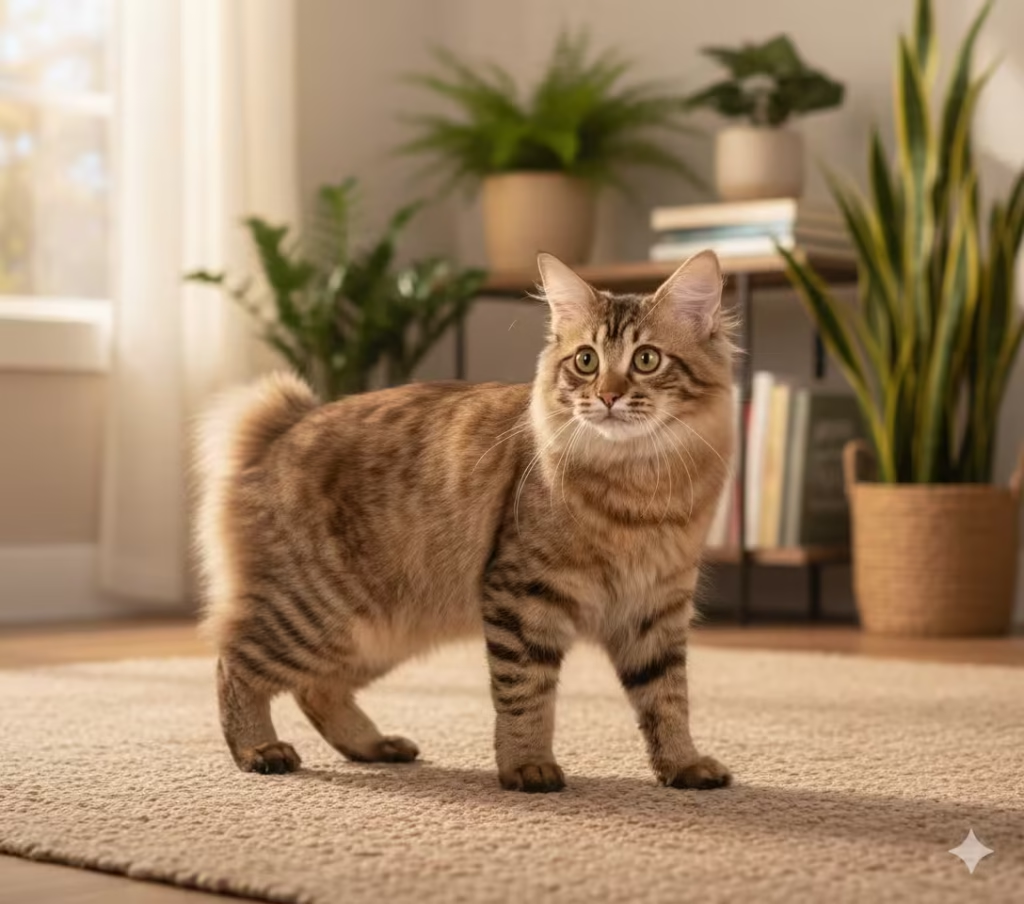
The American Bobtail is a muscular, medium-to-large breed with a unique developmental timeline. Proper nutrition is essential not only for maintaining their athletic physique but also for supporting their extended growth period.
1. The Extended Kitten Phase
Unlike many domestic cats, the American Bobtail takes up to three years to reach full physical maturity.
- Implication: They may require high-quality Kitten Food for a significantly longer period than other breeds to support their prolonged skeletal and muscular development.
2. Nutritional Guidelines by Life Stage
- Kittenhood (Up to 2-3 years): Focus on high-protein, calorie-dense formulas to fuel growth.
- Adulthood (3 to 7 years): Transition to premium Adult Food. Monitoring calorie intake is crucial to prevent obesity, as they have a sturdy, broad frame.
- Senior Years (7+ years): Switch to Senior Cat Food containing joint supplements (like glucosamine) and highly digestible proteins to maintain muscle mass while managing weight.
3. Approved and Prohibited Foods
While no specific food sensitivities are reported for this breed, a balance of dry and wet (canned) food is ideal for hydration and dental health.
- Safe Choices: High-quality commercial diets or balanced raw formulations.
- Strictly Prohibited: Human foods toxic to felines, such as chocolate, grapes/raisins, onions, and garlic.
- Hydration: Always ensure constant access to clean, fresh water.
Health and Longevity of the American Bobtail
The American Bobtail is renowned for being a remarkably hardy and resilient breed. Its robust health is largely attributed to its broad gene pool, as breeders have consistently used random-bred domestic cats as allowable outcrosses to maintain genetic diversity and prevent inbreeding.
1. Genetic Traits and Mutation Management
While the short tail is a result of a natural autosomal dominant mutation, the breed is free from many of the genetic disorders that plague more closed-gene-pool breeds.
- No Specific Hereditary Diseases: Scientific literature currently reports no specific genetic illnesses or drug sensitivities unique to this breed.
- Spine Health: To avoid health risks, professional breeders strictly avoid mating cats that are entirely tailless. A completely absent tail can lead to a foreshortened spine, causing neurological or defecatory issues. Consequently, “rumpy” (tailless) Bobtails are disqualified from championship shows.
2. Lifespan and Vitality
The average lifespan of an American Bobtail is between 13 to 15 years, though many live longer due to their high genetic vitality.
- Slow Maturation: Because they mature slowly, providing life-stage-appropriate nutrition during the first three years is critical for long-term health.
- Longevity Factors: Regular veterinary check-ups, high-quality nutrition, and a stimulating indoor environment are key to extending their life and maintaining their “wild” vigor.
Breeding Standards of the American Bobtail
The breeding of the American Bobtail is governed by strict protocols to ensure the preservation of its health and unique “wild” aesthetic. Major feline associations like TICA and CFA provide the framework for these standards.
1. Outcrossing and the Gene Pool
To prevent inbreeding and expand the relatively small gene pool, outcrossing with domestic shorthair and longhair cats (not belonging to any recognized breed) is still permitted.
- Genetic Diversity: This strategy ensures a healthy, robust lineage.
- Variability: Due to ongoing outcrossing, minor variations in color, pattern, and coat length are expected until the gene pool is officially closed.
2. Registry Regulations: TICA vs. CFA
Registration rules vary significantly between associations:
- TICA (The International Cat Association): Outcrossing with domestic cats is permitted without prior written approval.
- CFA (Cat Fanciers’ Association): The process is more rigorous. Registration of domestic bobtailed cats requires written approval from the Breed Council Secretary, the Chair of the Genetics/Breeds & Standards Committee, and a CFA Allbreed Judge.
3. Disqualification Criteria
To maintain feline welfare and breed integrity, certain traits lead to disqualification in shows:
- Tail Issues: Being completely tailless (linked to foreshortened spine health risks) or having a full-length tail.
- Anatomy: Fine bone structure or an incorrect number of toes (polydactylism is not accepted in this breed’s standard).
Frequently Asked Questions (FAQ): Common Questions About the American Bobtail
1. Is the American Bobtail a wild cat or a hybrid?
No. Despite its rugged “Bobcat” appearance, the American Bobtail is a fully domestic breed. Its short tail is the result of a natural genetic mutation, not hybridization with any wild feline species.
2. Are American Bobtails good with children and other pets?
Yes, they are exceptionally social. Known for their “dog-like” personality, they are famous for getting along well with children and other animals, often adapting quickly to the dynamics of a multi-pet household.
3. Do American Bobtails shed a lot?
They have a dense double coat that sheds seasonally. While they aren’t heavy shedders, a weekly brushing for shorthairs, or two to three times a week for longhairs, is necessary to manage loose fur and maintain coat health.
4. Can American Bobtails be trained to walk on a leash?
5. How long does it take for an American Bobtail to reach full size?
Absolutely. Due to their high intelligence and adaptable nature, many American Bobtails enjoy leash training and make excellent travel companions for outdoor adventures.
They are a slow-maturing breed. It typically takes 2 to 3 years for an American Bobtail to reach its full physical adult size and muscular weight.
6. Do they have health problems due to their short tails?
Unlike some other short-tailed breeds, the American Bobtail is generally very healthy. However, professional breeders avoid tailless (“rumpy”) cats to prevent potential spine issues. Always ensure your cat comes from a breeder who prioritizes genetic health and outcrossing.
Conclusion: The Legacy of the American Bobtail
In summary, the American Bobtail is a masterpiece of feline evolution, offering a perfect balance between a rugged, wild aesthetic and a serene, domestic temperament. Its distinctive features—such as the natural bobbed tail, almond-shaped eyes, and resilient double coat—set it apart from all other breeds.
1. A Healthy and Devoted Companion
Because this breed is developed with a focus on genetic diversity and health, hereditary issues and drug sensitivities are remarkably rare. Their high adaptability to children and other pets, combined with relatively low maintenance needs, makes them a loyal and entertaining companion for many years.
2. Is the American Bobtail Right for You?
Choosing an American Bobtail is an excellent decision if you value intelligence and a unique physical presence.
- The “Dog-Like” Experience: Ideal for those who want a cat that interacts like a dog—playing fetch, walking on a leash, and bonding deeply with the family.
- Travel and Busy Lifestyles: Their calm nature makes them excellent travelers and adaptable to busy environments.
- Mental Stimulation: Prospective owners should be aware of their “Houdini-type” intelligence. These cats require mental engagement and a stimulating environment to stay happy.
If you have the time to engage with a brilliant and social feline, the American Bobtail is an exceptional choice for a lifelong, loyal friend.
references
- veterinary24.ir
- Encyclopedia of Cat Breeds: J. Anne Helgren “A Complete Guide to the Domestic Cats of North America 2nd edition
- Veterinary Medical Guide to Dog and Cat Breeds: Jerold S. Bell (DVM), Kathleen E. Cavanagh (DVM), Larry P. Tilley (DVM), Francis W. K. Smith (DVM)
Was this article helpful for you?

